Can Pressure Washing Damage Concrete?
Don't Pressure Wash Your Concrete Until You Read This.
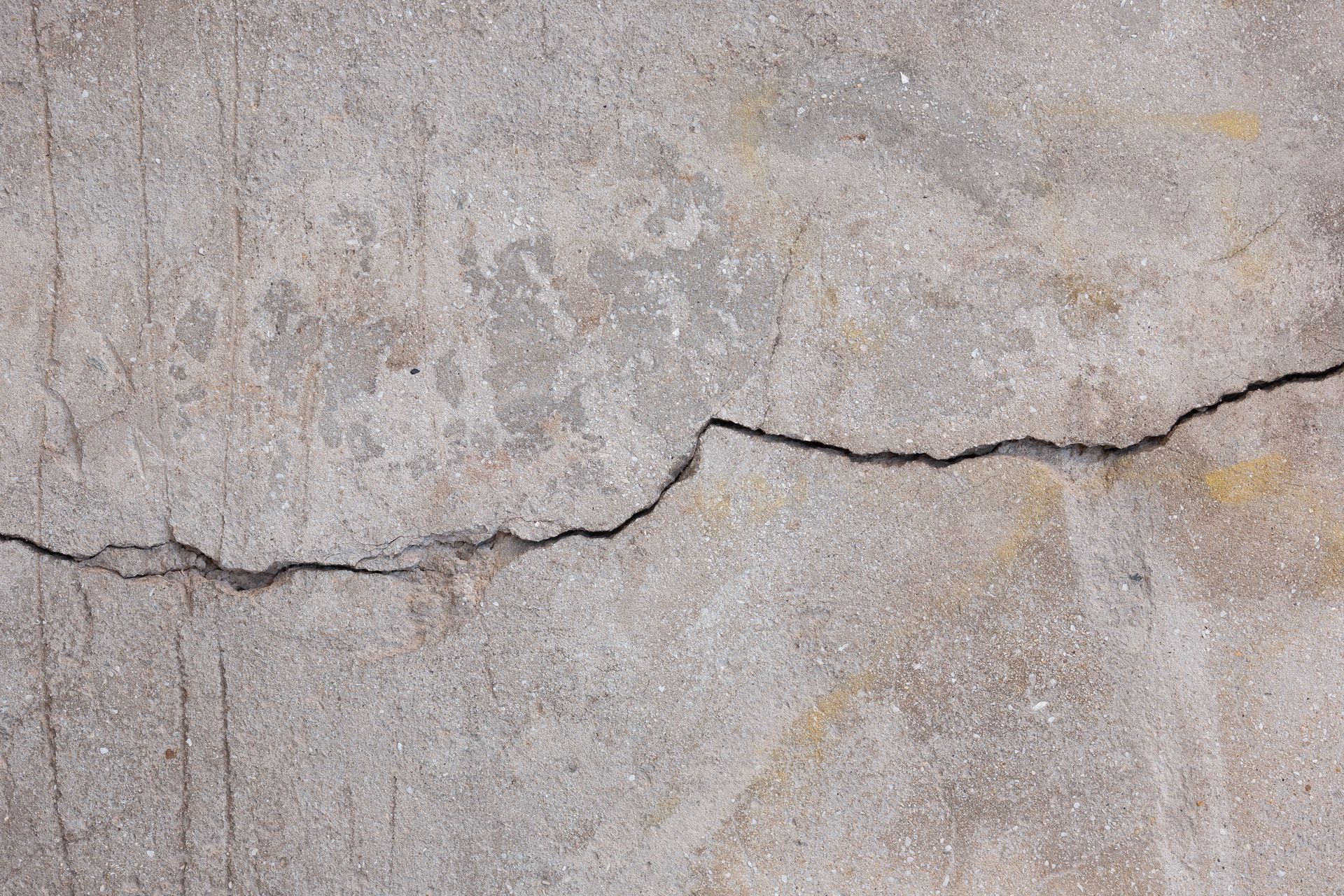
Can Pressure Washing Damage Concrete? YES!
Quick Answer
Yes, pressure washing can damage concrete!
Concrete is tough, but it isn't indestructible. Too much pressure, holding the nozzle too close, concentrating the spray in one spot or using the wrong technique can permanently etch or mark the surface. It can even make existing damage considerably worse if the concrete is already chipped, flaking or badly cracked.
So, yes, pressure washing can damage concrete. But we won’t.
Our soft power washing system is designed specifically to clean
and protect concrete, through correctly applied pressure and custom-mixed, environmentally friendly cleaners.
Still not sure? Hey, if you have the time, we have the answer. Read on!
How to clean concrete without damaging it?
Start by knowing what you're cleaning—and what's making it dirty.
Concrete Is Hard. Water Can Be Harder.
It sounds a little ridiculous.
How can water damage concrete?
Give that water enough pressure and concentrate it into a small enough area, and things change.
Pressure washers can produce thousands of pounds of pressure per square inch. Used appropriately, that makes them very effective cleaning tools. Used incorrectly, that same concentrated stream can etch the surface of concrete and leave permanent marks.
- Get too close with the nozzle.
- Stay in one spot too long.
- Use too much pressure.
- Clean unevenly.
And instead of removing the mark you wanted gone, you can leave a new one behind.
Clean concrete is good. Clean concrete with your cleaning pattern permanently drawn into it isn't.
Not All Concrete Is The Same
Remember our rule: Identify first. Clean second.
Age and condition matter. Older concrete isn't necessarily the same as newer concrete. Decorative, stained or previously damaged concrete can bring additional considerations.
A relatively new concrete driveway is one thing.
An older sidewalk that's been through decades of Delaware summers and winters is another.
Stamped concrete is a different conversation entirely.
Stained or decorative concrete? How much time do you have? Different again.
Concrete that's already flaking, spalling or deteriorating deserves attention before somebody decides the solution is simply more pressure.
That's why there's no magic pressure setting that answers every concrete-cleaning question.
The surface gets a vote.
What's On The Concrete Matters Too
Here's the other half of the equation.
What are we trying to remove?
- Dirt?
- Algae?
- Mold or mildew?
- Oil?
- Grease?
- Rust?
- Leaf and organic stains?
Different stains don't necessarily respond to the same cleaning method.
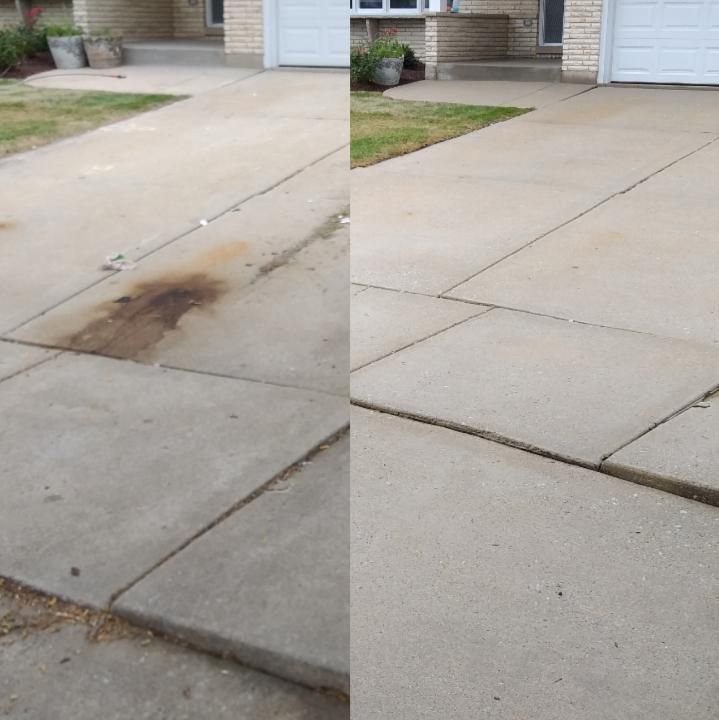
Concrete is porous, which means substances such as oil and grease can work their way into the surface rather than simply sitting on top of it.
That's where cleaning solutions and techniques become important.
If the right cleaner can help break down what's causing the stain, we don't need to ask water pressure to do all the work.
More pressure isn't always more cleaning.
Sometimes it's just more pressure.
Can Pressure Washing Actually Be Good For Concrete?
Absolutely.
Pressure washing is commonly used to clean concrete driveways, patios, sidewalks and other hard surfaces. It's even specified as a preparation step for some concrete repair and resurfacing products.
The trick isn't avoiding pressure.
It's controlling it.
Pressure.
Water flow.
Nozzle.
Distance.
Movement.
Cleaning solution.
Condition of the concrete.
What's being removed.
They work together.
That's the difference between using pressure as a cleaning tool and treating it like a weapon.
So, Should You Pressure Wash Your Concrete?
If it's dirty, it probably needs cleaning.
Around Sussex County, driveways, sidewalks and patios collect everything from ordinary dirt and vehicle residue to pollen, leaves, algae and stains from everyday use.
And yes, pressure can be part of cleaning them.
But the goal isn't to find out how much pressure your driveway can survive.
The goal is to get it clean.
At Sussex Pro Wash, we look at the surface, its condition and what's making it dirty before deciding how to clean it.
Because concrete may be tough.
But there's no reason to make it prove it.