We Clean Dirty Decks!
We Remove The Stains And Get Your Dirty Deck Out Of The Gutter.
Quick Answer
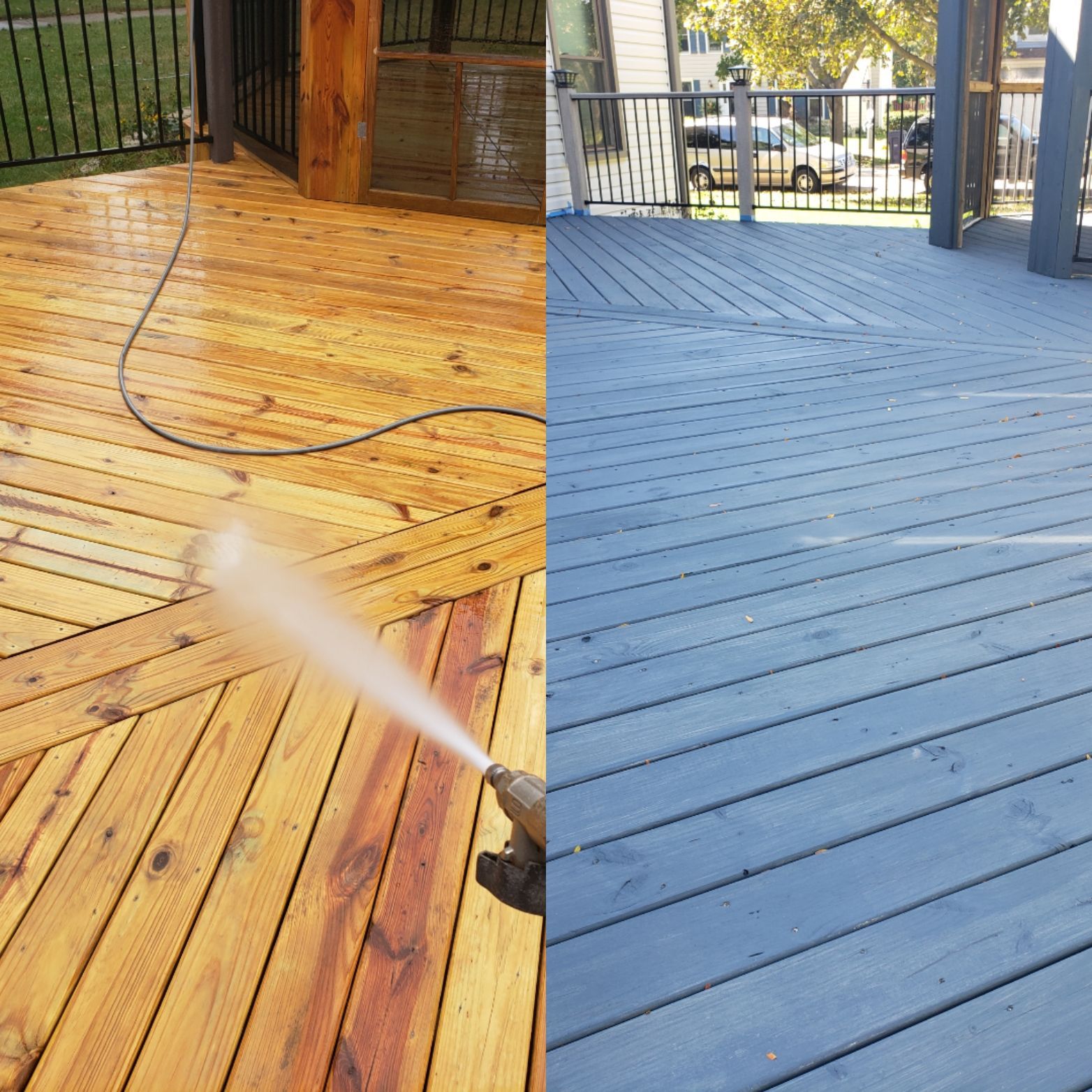
Whatever stains, dulls or otherwise makes your deck look dingy and dirty, we can clean it! Beach decks in Delaware, from Rehoboth and Lewes, to Bethany, Milton and all along coastal Sussex County, get a special kind of dirty: Grease drippings from the grill. Mold, mildew and algae growth from humidity, shade and trees. Pollen. Ground in salt, sand, and dirt. Suntan oil and foot traffic from summer time guests.
We clean it all. And just as important is how we clean it. Starting with knowing what your deck is made of.
We Clean It Based On How It’s Built
Wood, composite and PVC decking can look similar from across the yard but react very differently to pressure, cleaning solutions and even the brushes used to clean them.
That's why good deck cleaning isn't about blasting away whatever looks dirty.
It's about removing what's on your deck without damaging what's underneath it.
At Sussex Pro Wash, that's what our soft power washing approach is designed to do.
Your Deck Lives Outside
Obvious, right?
Sure.
But think about what that actually means.
Your living room doesn't spend six months beneath a tree.
Your kitchen floor doesn't get rained on.
Your bedroom doesn't sit through humid August nights in Rehoboth Beach.
Your deck does.
Then we add everything we do to it.
- Cookouts.
- Drinks.
- Food.
- Planters.
- Furniture.
- Bare feet.
- Pets.
- Kids.
- Wet towels.
And that grill nobody has moved since Memorial Day.
A deck is supposed to be used.
The dirt is proof that you did.
Why Is My Deck Turning Green?
This is one of those questions worth answering before anybody starts cleaning.
Moisture and organic debris create opportunities for algae, mold and mildew to develop, particularly where surfaces remain damp or shaded. Even composite decking manufacturers warn that accumulated pollen and dirt can provide material on which mold can grow.
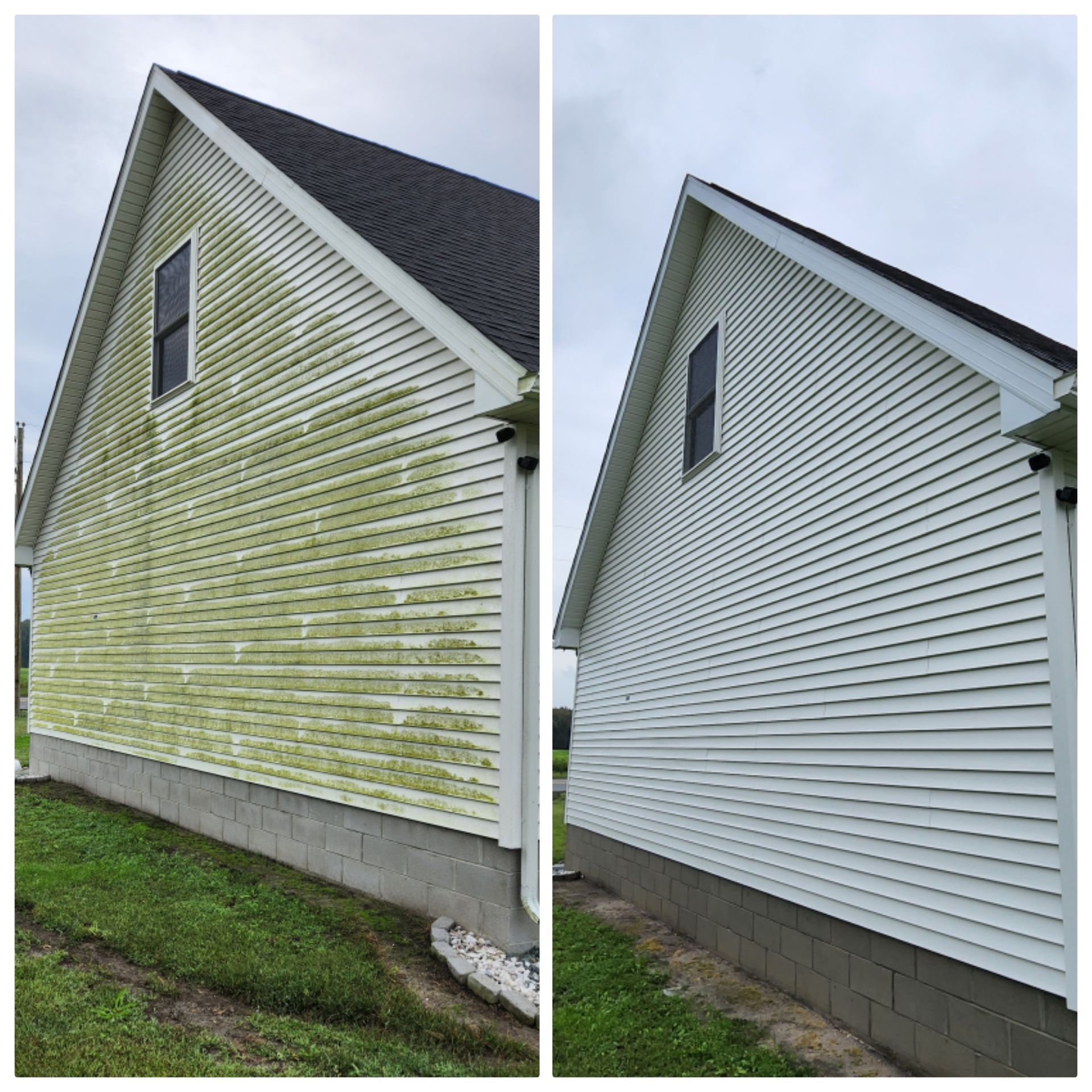
That's why the green stuff often doesn't appear evenly.
-One section gets afternoon sun.
-Another sits beneath trees.
-The area beside the house stays shaded.
-Furniture prevents another section from drying as quickly.
-Leaves collect in a corner.
-The environment changes across the same deck.
So if one section keeps turning green faster than another, don't assume there's something mysterious happening to the boards.
Look up. Look out. Look around. It can happen. (For music lovers, this is also a reference to Yes, a truly remarkable band).
Wood Is Tough. Pressure Is Tougher.
Wood decks can take a beating.
That's one reason we build decks from wood in the first place.
But wood isn't concrete.
Excessive pressure, getting too close with a nozzle or repeatedly concentrating water in one place can damage the wood surface, raise fibers and leave visible marks.
And not every wood deck starts in the same condition: A newer pressure-treated deck isn't the same as an older deck that's been through fifteen Delaware summers. Cedar isn't pressure-treated pine. Painted wood isn't bare wood. Stained wood introduces another finish that needs consideration. Weathered boards may already have areas that deserve extra care.
So before deciding how aggressively a wood deck should be cleaned, we need to know what we're cleaning and what condition it's already in.
That's a recurring theme around here for a reason.
Composite Doesn't Mean Indestructible
Composite decking has changed tremendously over the years.
And that's precisely why saying “It's composite, so clean it this way” can be bad advice.
Different products have different surfaces, formulations and manufacturer instructions.
Trex, for example, allows pressure washing on several of its current high-performance product lines under specific conditions, while warning against pressure washing some earlier-generation products because it can damage the decking surface.
TimberTech has different instructions for its products, recommending a particular cleaner and brush and limiting power washing to rinsing at no more than 1,500 PSI.
That's a pretty useful lesson.
The name on the board can matter.
If we know the manufacturer and product, we can take its care instructions into account instead of assuming every synthetic deck gets treated identically.
That's not being overly cautious.
That's cleaning the deck you actually own.
And Then There's PVC
PVC and composite often get lumped together because neither is a traditional wood deck.
They're still not necessarily the same thing.
Even within a single manufacturer's product range, recommended brushes and cleaning methods can differ between composite and advanced PVC decking. TimberTech, for example, specifies different brush types for its PVC and composite products.
Which brings us right back to our basic rule:
Identify first. Clean second.
If the manufacturer has specific care instructions, those instructions belong in the conversation.
Because getting something clean today isn't much of a victory if the process damages the surface you're trying to maintain.
Salt Doesn't Stop At The Railing
Your deck is sitting in the same environment.
Properties closer to Rehoboth Beach, Lewes and Bethany Beach can experience salt residue alongside humidity, rain, sand, pollen and ordinary dirt.
And horizontal surfaces have another disadvantage: Things land on them and stay there.
Deck boards, steps, railings and furniture can all collect whatever the wind and weather bring.
That doesn't mean salt is secretly eating every deck in Sussex County.
It means coastal exposure becomes another part of the maintenance equation.
In fact, TimberTech specifically recommends more frequent cleaning for certain railing products located within a mile of the seashore than for those farther away.
The coast doesn't make maintenance impossible.
It just gives us another reason to pay attention.
The Grill Has Entered The Conversation
Not everything on your deck came from nature.
Some of it came from dinner.
- Grease.
- Food.
- Drinks.
- Sunscreen.
- Maybe whatever the kids were carrying when they ran across it.
These aren't necessarily the same cleaning problem as algae or ordinary dirt.
Manufacturers themselves distinguish between general dirt and debris, mold and mildew, and food/oil/grease when providing cleaning instructions for composite decking.
That's because what made the stain matters.
Cleaning chemistry can do work that pressure shouldn't have to.
The objective isn't to see whether enough water pressure can eventually erase something.
It's to determine what we're removing and choose an appropriate way to remove it.
Low Maintenance Still Requires Maintenance
Composite and PVC decking are often sold partly because they're low maintenance. That's not the same thing as no maintenance.
Trex explicitly says all exterior building materials require cleaning. TimberTech similarly recommends routine debris removal and periodic cleaning of its decking products.
Wood obviously needs attention too, particularly if finishes, stains or sealers are part of the system.
So how often should your deck be cleaned? We're not going to give every deck in Sussex County the same birthday.
Look at yours...
-Is green growth beginning to appear?
-Does pollen collect heavily every spring?
-Is the shaded section getting dark?
-Has a season of entertaining left food and grease around the grill?
-Are leaves collecting between or against boards?
-Does the coastal side of the property accumulate residue faster?
The deck will usually tell you before the calendar does.
Don't Clean The Life Out Of It
A dirty deck needs cleaning.
A clean deck shouldn't need repairing because somebody got carried away cleaning it.
- Wood.
- Composite.
- PVC.
- Paint.
- Stain.
- Age.
- Condition.
- Manufacturer recommendations.
- What's growing on it.
- What's spilled on it.
They all matter.
That's why at Sussex Pro Wash, we don't begin with:
How much pressure can we use?
We begin with:
What are we cleaning?
Then we choose the cleaning approach accordingly.
Because your deck is there for cookouts, bare feet, morning coffee, cold drinks, family, friends and everything else that happens outside.
Get it dirty. That's what it's for.
We'll clean it.
And while you're standing on that freshly cleaned deck looking back at the house, you may notice something else:
Why does one side of my siding keep turning green?
That's where we're going next.