Your Driveway Is Dirty. We'll Clean It!
We Clean Driveways The Right Way
Quick Answer
Concrete, asphalt and paver driveways all get dirty.
That doesn't mean they should all be cleaned the same way.
Driveways in Rehoboth, Lewes, Bethany Beach, Milton and throughout Sussex County spend every day collecting dirt, sand, pollen, leaves, algae, mildew, tire marks, automotive fluids and whatever else gets driven, blown, dropped or dragged onto them.
Professional power washing can make a tremendous difference.
But before anybody pulls the trigger on a pressure washer, there's a more important question:
What are we cleaning?
Concrete isn't asphalt.
Asphalt isn't pavers.
And even two concrete driveways can have different ages, finishes, stains and conditions.
That's why good driveway cleaning isn't about using as much pressure as possible.
It's about using the right pressure, water, temperature and cleaning solution for what's dirty—and what's underneath it.
Your Driveway Has A Tough Job
Your driveway deals with this stuff everyday!.
- Cars and trucks.
- Hot tires.
- Oil.
- Grease.
- Leaves.
- Tree sap.
- Bird droppings.
- Grass clippings.
- Rain.
- Pollen.
- Mud.
- Sand.
- Shade.
- And here in coastal Sussex County, plenty of humidity.
Some of that simply makes a driveway look dirty. Some of it stains. And some of it can grow.
The University of Delaware Cooperative Extension specifically notes that overwatering around sidewalks and driveways can contribute to unsightly mold and algae growth.
So when that clean gray driveway slowly starts turning green, brown, black or some mysterious combination of all three, the problem isn't necessarily the driveway.
It's what's living, leaking and landing on it.
Concrete Is Tough. But It Isn't Indestructible.
Concrete practically begs people to hit it with a pressure washer.
-It's hard.
-It's heavy.
-It holds up cars.
Surely a little water isn't going to hurt it.
That’s usually true. Properly applied pressure washing is an effective way to clean concrete.
But there's an important word in that sentence:
Properly.
Too much pressure, the wrong nozzle or getting too close to the surface can permanently etch concrete. Older concrete, stained concrete, stamped surfaces and damaged areas can require additional consideration:
Concrete is also porous.
That matters because oil, grease and other contaminants can penetrate instead of simply sitting on top. Different stains can require different cleaning chemistry; turning up the pressure doesn't automatically solve the problem.
Sometimes the smartest way to use less force is to let the cleaning solution do more of the work.
Sound familiar?
Asphalt Changes The Rules
An asphalt driveway may look every bit as substantial as concrete.
But it's a different material.
That means we don't automatically approach it with the same pressure, temperature or cleaning process we'd use on concrete.
-Age matters.
-Condition matters.
-Previous repairs matter.
-Sealer matters.
-And the stain matters.
An oil spot, algae growth and ordinary surface dirt are three different cleaning problems.
The objective isn't to prove the equipment can remove something.
It's to clean the driveway without unnecessarily damaging the surface underneath it.
That's the same principle we've been applying everywhere else around the house.
Pavers Have Something Concrete Doesn't
Joints.
And those joints matter.
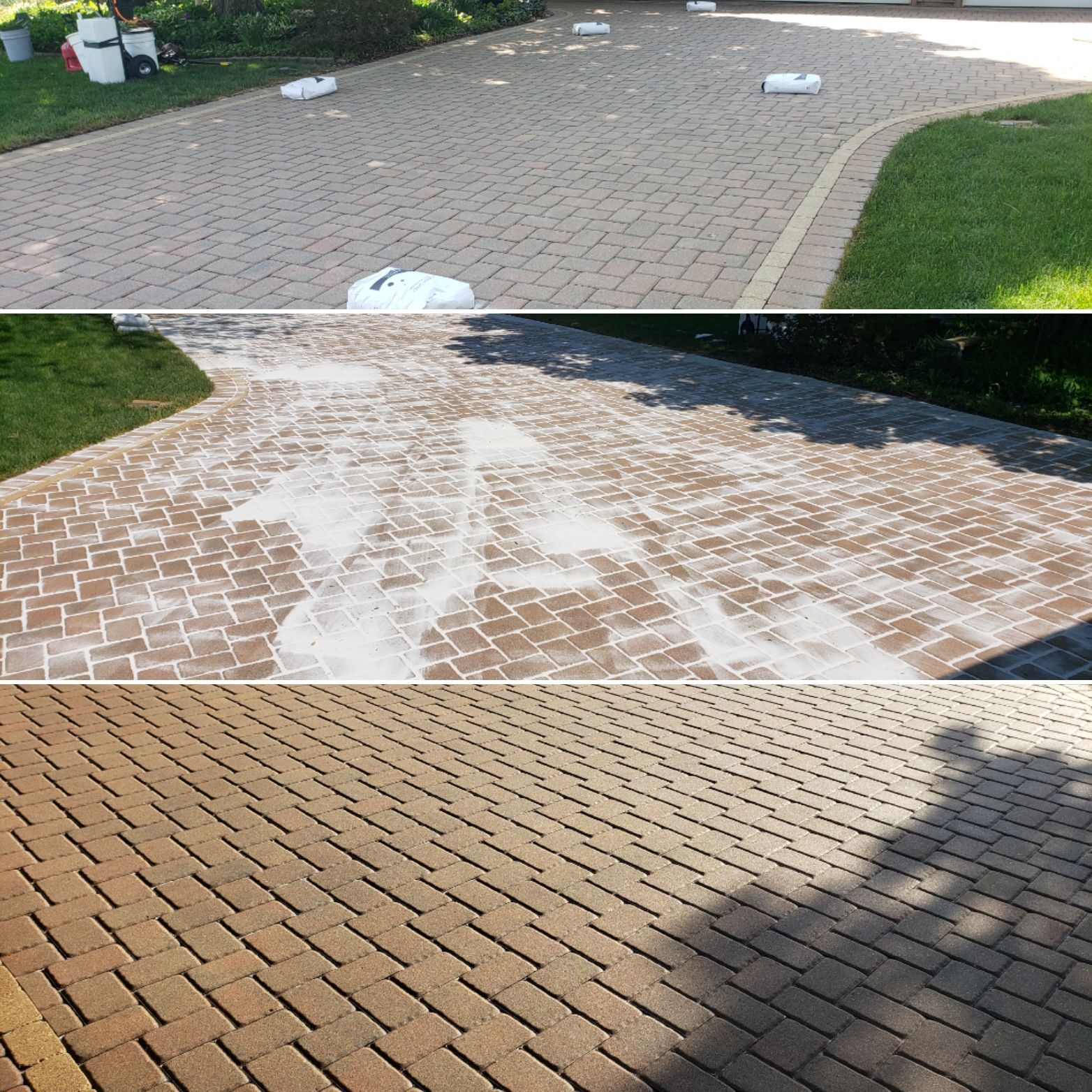
A paver driveway isn't one continuous slab. Individual pavers are separated by joints that may contain ordinary jointing sand or polymeric sand.
That creates another way improper pressure washing can cause trouble.
Hit the surface too aggressively and you aren't necessarily just cleaning the face of the pavers.
You can start blowing the joint material out from between them.
Paver manufacturer Unilock specifically warns against using high power when pressure washing pavers because it can damage the surface, and notes that displaced joint sand may need to be replaced afterward.
So again:
More pressure isn't automatically more cleaning.
Sometimes it's just more pressure.
What Are Those Black And Green Areas?
If part of your driveway stays damp and shaded, don't be surprised if it starts changing color.
Algae and similar organic growth appreciate many of the same conditions we've already discussed around siding and roofs:
- Moisture.
- Shade.
- Organic material.
- Time.
A driveway beneath trees may behave very differently from one sitting in full sun all day.
Even the same driveway can develop buildup faster along one edge because landscaping, irrigation or shade keeps that section wetter.
And because organic growth can become slippery when wet, cleaning isn't always purely cosmetic.
Sometimes the ugly stuff is also the slippery stuff.
Then There Are The Stains
This is where driveways become particularly interesting.
Oil isn't algae.
Rust isn't grease.
Leaves aren't tire marks.
And bird droppings aren't any of them.
Concrete-cleaning guidance distinguishes between different contaminants because different cleaners and methods work on different stains. Oil and grease, for example, can benefit from degreasers and hot water, while organic stains require a different approach.
That's why we don't look at every dirty driveway and think: More PSI!
We look at the stain.
Then the surface.
Then we determine how to clean both.
How Often Should You Clean Your Driveway?
Here comes our favorite answer...
It depends.
- A heavily shaded driveway may develop organic growth faster.
- A driveway beneath trees may collect more leaves, pollen and staining.
- A busy household puts more vehicles across the surface.
- Older surfaces may need more careful treatment than newer ones.
- Properties closer to the coast experience a different mix of sand, moisture and airborne material than more protected properties inland.
Instead of cleaning according to an arbitrary date on the calendar, pay attention to the driveway.
- Is it getting darker?
- Are green areas developing?
- Are oil spots accumulating?
- Do shaded sections remain damp?
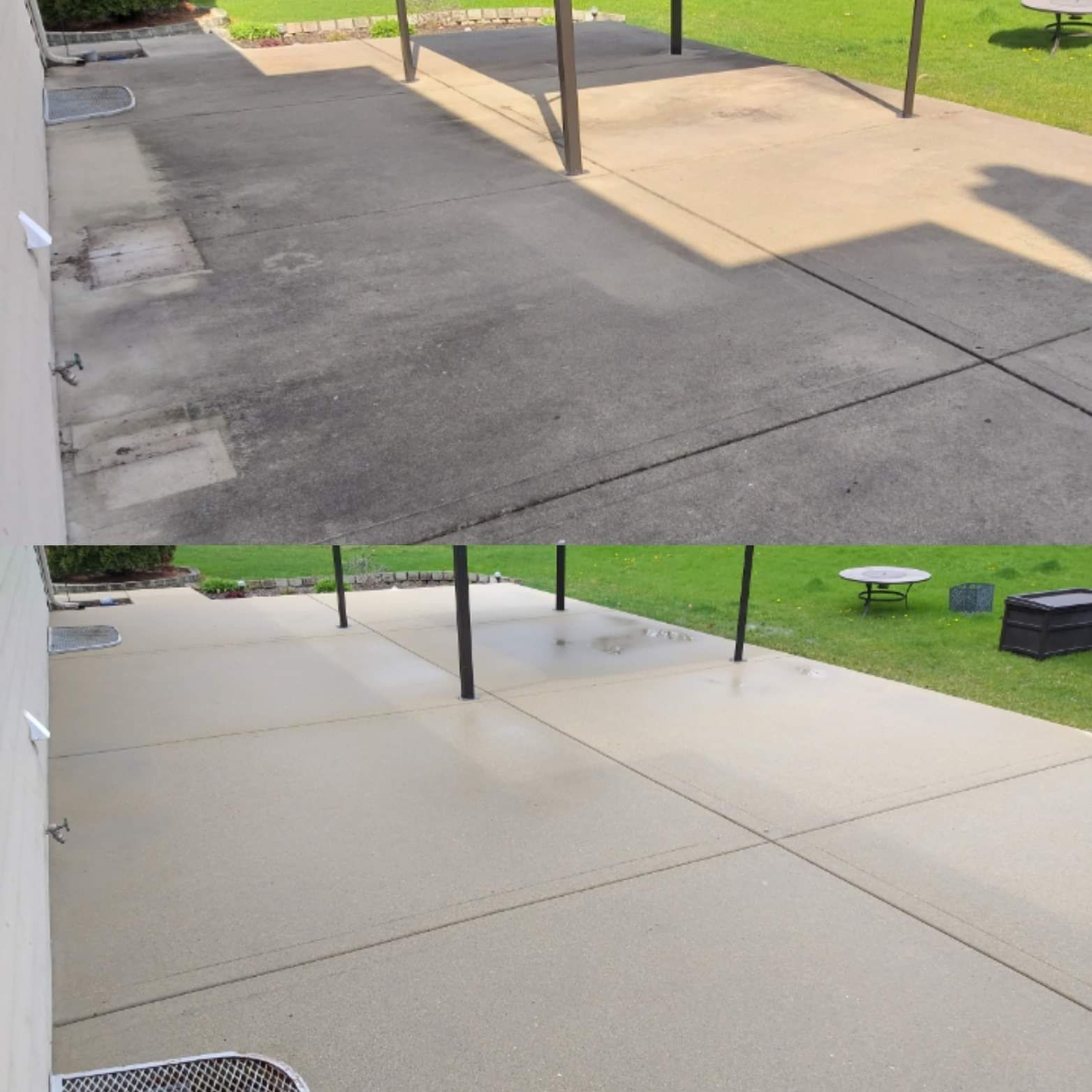
- Is the difference between the cleaned area near the garage and the rest of the driveway becoming obvious?
Those are your clues.
The best maintenance schedule handles buildup before years of it become the new color of the driveway.
You Can Damage A Driveway While Trying To Clean It
This may be the most important part.
A pressure washer is a tool.
And like most powerful tools, it doesn't know whether the person holding it knows what they're doing.
Improper pressure can etch concrete.
Aggressive cleaning can disturb paver joints.
The wrong treatment can affect finishes or sealers.
And simply concentrating maximum pressure on a stubborn stain doesn't guarantee the stain will disappear.
Sometimes you'll just end up with a clean-looking stripe around a stain that's still there.
The objective isn't:
How much pressure can this driveway take?
It's:
What's the least aggressive method that will clean it properly?
That's a very different question.
The Bottom Line
Driveways look simple.
-They're flat.
-They're tough.
-They're outside.
-And they get dirty.
But once you look closer, there's a lot happening on that big piece of ground in front of your house.
Concrete, asphalt and pavers aren't identical.
Neither are algae, oil, rust, dirt and organic stains.
At Sussex Pro Wash, we match the cleaning process to both sides of the problem:
What's on the driveway.
And:
What the driveway is made of.
Because a clean driveway can change the appearance of an entire property.
But cleaning it shouldn't change the driveway itself.
And speaking of things growing where they shouldn't...
Your driveway isn't the only hard surface around your home that can become green, dark and slippery.
Patios, sidewalks and pool decks may be telling you the same thing.